Texas
Inheriting a House With Debt: What You Actually Owe in Texas
By Daniel Bear · Texas · July 22, 2026
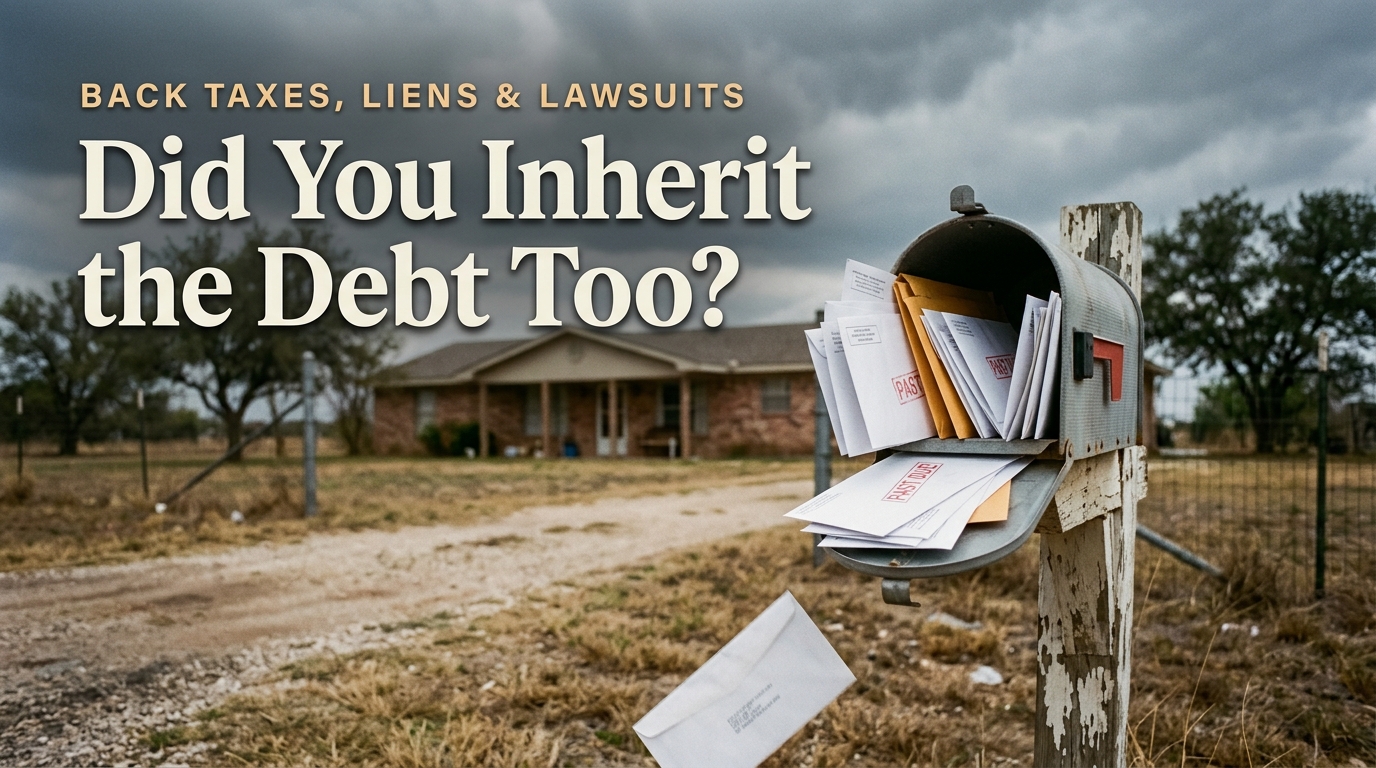
The calls usually start the same way. Mom or an uncle passed, a letter showed up about back taxes or a lawsuit, and the first question comes out in a rush: am I on the hook for this? Inheriting a house with debt scares people more than almost anything else I deal with, because they assume the debt just became theirs. Most of the time, it didn't.
I talk to Texas heirs about this every week, and some of them haven't slept since the letter arrived. Inheriting a house with debt comes with rules that mostly work in your favor, once you actually know them. So let me answer the big question here the same way I answer it on the phone, then walk you through what the debt does to the house while everyone freezes. That second part is the real problem.
Quick answer: when you're inheriting a house with debt in Texas, the debt attaches to the property and the estate, not to you personally. Back taxes, liens, and judgments against the person who died get paid from the property, usually when it sells. Nobody can make you cover them from your own bank account. But the debt keeps growing until someone acts.
Do Heirs Inherit Debt? Here's the Honest Answer
"Do heirs inherit debt" is the question underneath every other question I get, and nobody teaches you the answer before it matters.
Texas law is clearer on this than people expect. Under Texas Estates Code Section 101.001, a house vests in the heirs the moment the owner dies, even with no will and no probate started. But it vests subject to the debts of the person who died, under Section 101.051. Plain English: you own the house now, and the house still owes what it owed.
That is a very different thing from you owing it. The county can't garnish your wages for your father's property taxes. Nobody can touch your savings, your paycheck, or your own home over debt that belongs to his estate. When I explain this on a call, I can usually hear the person breathe for the first time.
Now the honest part, because there is real exception territory:
- You co-signed. If you were a co-borrower or guarantor on a loan with the person who died, that debt is genuinely yours. It always was.
- You're the surviving spouse. Community property rules can put marital debts on both spouses. That's attorney territory, not a blog paragraph.
- The debt is yours, not theirs. Your own liens follow you into the inheritance. We closed a deal where an heir had a child-support lien, and it attached to his share of the property before he could get paid.
- You keep the house. The liens never transfer to you personally, but nobody will buy or insure the place until they're paid. Keeping it means dealing with them.
None of those exceptions change the core rule of inheriting a house with debt in Texas: creditors of the dead get paid from the estate, not from the living. Even when the county files a tax lawsuit and your name is on it as a defendant, the county is suing to force the property to a sale. It is not filing a personal claim against your wallet.
So why does it still feel like a trap? Because the debt is eating an asset you now own.
That's the real stakes of inheriting a house with debt. Not that they'll come for you. That the house bleeds value while the family argues about what Dad would have wanted.
Inheriting a House With Debt in Texas: What Actually Attaches
When people picture inheriting a house with debt, they picture a mortgage. In the heir work I do, the mortgage is usually the smallest problem on the list. Since 2016 I've pulled title and tax history on inherited properties all over Texas and Montana, and here's what actually shows up, in the order it hurts.
Property taxes and the tax lawsuit: the big one
Property taxes are on nearly every inherited house we buy, and they're the only debt with a government collection machine behind it.
The taxes don't pause when the owner dies. The bill keeps coming in a dead person's name, often to a house nobody checks the mail at, and the heirs find out years later when the county files a tax lawsuit naming every one of them it can identify. If you got served papers on a house you barely knew existed, that's what happened. One heir told me she knew almost nothing about the house until the papers arrived.
Judgments and liens
After taxes, I look for everything else recorded against the property: city judgments for mowing and code violations, mechanics liens from unpaid contractors, IRS liens, judgments from old lawsuits against the person who died. These sit on the title quietly. They don't show up in your mailbox. They show up when someone tries to sell.
And remember the wrinkle from above. Judgments against any individual heir can attach to that heir's share too. When my team runs our chain-of-title work, they search every heir, not just the property, because one missed lien can blow up a closing.
The mortgage
A mortgage stays with the property, and the lender keeps the right to foreclose if payments stop. The good news: the federal Garn-St Germain Act blocks lenders from calling the loan due just because a relative inherited, so an heir who moves in can usually keep paying the existing loan, and any heir can sell. Everything else, including reverse mortgages and how to deal with the servicer, is in my full guide to inheriting a house with a mortgage.
How Back Taxes Snowball: From Missed Bill to Auction
I want to slow down on back taxes, because this is where inheriting a house with debt turns from a paperwork problem into a countdown.
Texas doesn't do gentle late fees. Under Tax Code Section 33.01, a delinquent tax picks up a 6 percent penalty the first month and climbs to 12 percent by July, plus interest of 1 percent a month on top.
Then the county hands the account to a collections law firm, which adds its own fees. An heir on one of my calls put it perfectly: they're stacking up fast. That's the design.
Here's the sequence I watch play out over and over:
- Delinquency. Nobody pays after the owner dies. Years can pass.
- The tax lawsuit. The county's law firm files suit and names every heir as a defendant. This is the scary-letter stage, and it's also the stage with the most options left.
- Judgment and order of sale. If nobody resolves it, the court enters judgment. And here's a myth worth killing: county payment plans generally only become available after judgment, not during the lawsuit. A staffer at the county's own collection firm confirmed that to us directly on a recorded call. If a relative says the family is "on a payment plan" mid-suit, verify it.
- The auction. The property sells on the courthouse steps, with bidding typically opening around the total owed, and these sales usually clear far below what the house is really worth. The county takes its taxes. Whatever is left doesn't just get mailed to the family: claiming excess proceeds is a separate court process, and most families need an attorney to see any of it.
Even after the auction there's one last door: redemption. Under Tax Code Section 34.21, a former owner can buy a homestead back within two years, but it costs everything the buyer paid plus a 25 percent penalty in the first year, and 50 percent in the second. Most other property gets just 180 days. Redemption exists, but it's the most expensive exit from inheriting a house with debt.
Two real numbers from my own files, no names.
A Dallas-area family came to us with about $42,000 in back taxes and a tax sale expected within weeks. Another family's inherited house with back taxes around $23,000 already has a trial date on the court's calendar. In both cases the debt grew for years before anyone opened a letter.
The Senior-Exemption Trap
Here's the one almost nobody sees coming.
Many longtime Texas owners carry a homestead exemption and an over-65 exemption that hold their tax bill down. Those exemptions die with the owner. Per the Texas Comptroller, a surviving spouse who is 55 or older can keep the over-65 tax ceiling, but children and other heirs cannot inherit it.
So the year after Dad passes, the taxes on the same house can jump to a number he never paid in his life. The heirs budget off the old bill, come up short, and the delinquency clock starts. If an heir moves in and genuinely lives there, Texas does allow a homestead exemption on inherited property, but it takes an application and heirship paperwork with the appraisal district. Most families never file it because they never hear about it.
This is the quietest version of inheriting a house with debt, because the debt didn't exist until the exemption vanished. If you take one action from this whole article, pull the current tax bill. Not last year's.
My Three-Question Debt Triage
When an heir calls me about inheriting a house with debt, I run the same three questions every time. You can run them yourself this week, for free. Can I walk you through how that works?
Question 1: Is the debt attached to the property, or to you?
Get the facts before the fear. Search the county deed records and the tax office website, and list every lien, judgment, and unpaid tax year. Mark each one: against the person who died, against the property, or against you personally. In my files, nearly everything lands in the first two columns, and those get paid from the house, not from your pocket.
Question 2: How far along is the county?
There's a huge difference between two years of unpaid taxes and an order of sale. Check the district clerk's records for a tax lawsuit. No suit yet means you have time.
An active suit means move with purpose, because judgment turns months into weeks. I've told heirs plainly: the further this goes, the less anyone can pay you for the property, because the window to fix the title keeps shrinking.
Question 3: Is there equity left after the debt?
Rough math is enough. Take a realistic as-is value, subtract every debt from Question 1, then subtract the cost of the fight: probate or an affidavit of heirship in Texas, attorney fees, repairs, time.
This is the question that decides whether inheriting a house with debt is a fight worth having. If a real number is left, fight. If the debt ate it, you're choosing how to exit, not whether to.
What to Do in the First Two Weeks
The first two weeks of inheriting a house with debt set the trajectory for everything after. You don't need a master plan. You need these five moves.
- Open every piece of mail addressed to the person who died, especially anything from the county, a law firm, or a lender. The scary letters contain the deadlines.
- Pull the tax record. Every Texas county posts balances online. Write down the total owed and the years covered.
- Check for a lawsuit. Search the county district clerk's site for the property or the owner's name.
- Don't pay anything yet. This one surprises people. Paying taxes on a house with a broken title can be a gift to co-heirs who contribute nothing, and you may not even be on the lien. Know what you own first.
- Map the heirs. Who else inherited, and what share? I've worked an estate with 18 interest holders on paper. Every plan starts with this list.
If you're still at the "where do I even start" stage, my post I inherited a house, now what is the step-by-step version, and my bigger guide to what happens when you inherit a house covers the full picture beyond the debt.
When Walking Away Is Rational, and When It Isn't
Let me give it to you straight, because most articles about inheriting a house with debt won't: sometimes the math says let it go.
The hardest file I've worked was a Dallas County estate with 18 heirs and somewhere between $40,000 and $45,000 in back taxes. The family spent four years in probate and paid two different attorneys.
Early on, the heirs expected around $10,000 each. By the time I talked to them, the realistic number was about $2,800 apiece. Four years of penalties, interest, and legal fees ate the difference, and nobody did anything wrong except wait.
If the debt plus the cost of clearing title swallows the value, walking away is not failure. It's arithmetic. You can also sell just your own share and let someone else carry the fight. Your share is your share. You don't need the family's permission to sell it.
But the opposite mistake is just as common. If the house has real equity, don't panic-sell over the tax debt.
One executor I spoke with had a $200,000 offer on a house carrying about $45,000 in taxes. Selling cheap "because of the taxes" would have thrown away six figures of family money, and I told her so on the call, even though it meant no deal for me. When the equity is real and the family can cooperate, pay the debt at closing out of the sale proceeds and sell it right.
The debt only wins when it's ignored. Whichever path fits, pick it on purpose.
Questions Heirs Ask Me About Inheriting a House With Debt
Almost never personally. Texas Estates Code Section 101.001 vests the property in the heirs immediately at death, subject to the estate's debts. Creditors get paid from the estate and the property, not from your wages or savings. The exceptions: debts you co-signed, certain community debts between spouses, and your own liens, which can attach to the share you inherit.
No. Back taxes are a lien against the property. The county collects by suing the owners of the property and eventually forcing a tax sale, not by pursuing your personal bank account. The risk is different: penalties and interest compound monthly, and if the tax lawsuit ends in an auction, the house itself is gone. You lose the asset, not your own money.
The suit moves on the court's calendar whether or not the family acts. Heirs who never respond effectively default, judgment enters, an order of sale follows, and the property auctions on the courthouse steps with bidding opening around the total owed. The county gets paid and the family often gets nothing. Ignoring the suit is choosing the worst outcome by accident.
You don't personally owe the loan unless you co-signed, but the lender keeps its lien and can foreclose if payments stop. Under the federal Garn-St Germain Act, inheriting from a relative doesn't trigger the due-on-sale clause, so an heir living in the home can usually take over the existing payments, or the family can sell and pay the loan off at closing.
Yes. Selling is how most families resolve inheriting a house with debt: the liens and back taxes get paid out of the sale proceeds at closing. The real obstacle is title, because every heir usually has to sign. Companies like mine also buy individual heir interests as-is and settle the debt at closing, so one heir can exit without waiting on the rest.
Sometimes. Run the math: realistic value, minus every debt, minus the cost of clearing title. If nothing is left, stop feeding it. But get real numbers before you decide. Inheriting a house with debt feels like inheriting a burden, and sometimes it is, but I've watched families nearly abandon five figures of equity that was sitting right there.
The Debt Belongs to the House. The Decision Belongs to You.
Here's the whole post in three sentences. In Texas, inheriting a house with debt means the debt is a claim on the property, not on your life. You can't be forced to pay it out of pocket, but you can lose the entire asset by waiting. The heirs who come out fine pull the records in week one, run the three-question triage, and pick a path while there are still paths to pick.
The heirs who lose are the ones who let the letters pile up unopened. I hate seeing the county win. It doesn't have to.
When the Debt Is the Reason You Can't Sell, That's Exactly What We Buy
TitleQuest Pro buys inherited houses, and individual heir interests, as-is in Texas and Montana. Debt isn't an obstacle for us. It's our specialty.
We pull the title and tax history ourselves, so you never pay to find out what's owed. My team builds the chain of title and the heirship picture in-house. The back taxes, liens, and judgments get handled at closing out of our money, not yours.
A mobile notary comes to you, wherever you live. And our written offer arrives within 48 hours and never expires, so you can sit with it as long as you need.
We've taken houses through this process that no title company would touch, curative work and all, in a matter of months. There's one more step in how we close, the one most sellers tell us surprised them most. Ask me about it on the call.
You can say yes. You can say no. You can think on it for a month.
If you want a number for a house or a share you inherited, tell us about the property or book a 15-minute call. No fees. No obligation. Inheriting a house with debt is heavy. Carrying it alone is optional.
TitleQuest Pro is not a law firm and this isn't legal advice. Every situation is different. If you need legal guidance, talk to a Texas probate or real estate attorney.

Daniel Bear
Founder, TitleQuest Pro
Daniel has been in real estate since 2016 and today buys inherited houses and untangles the titles other buyers won't touch. He works from Bozeman, Montana, with one foot in Montana and the other on the ground in Texas. TitleQuest Pro is not a law firm; this is general information, not legal advice.
Related reading.
What happens when you inherit a house
The whole map: the law, the five realities, and every path forward.
What happens when you inherit a house →Inheriting a house with a mortgage
The loan doesn't die with the owner, and federal law protects heirs. What to ask first.
Inheriting a house with a mortgage →I inherited a house, now what
The seven-step, first-14-days checklist, in order.
I inherited a house, now what →Ready when you are.
When you're ready to talk, we're here. Fill out the form, give us a call, or book a 15-minute conversation with Daniel. We'll handle the next step.
Tell us about the property.
We'll review it. We'll call you back within 24 hours. No pressure, no fees, no obligation.