Texas
Inheriting a House That Is Paid Off: Free and Clear Isn't Finished
By Daniel Bear · Texas · July 22, 2026
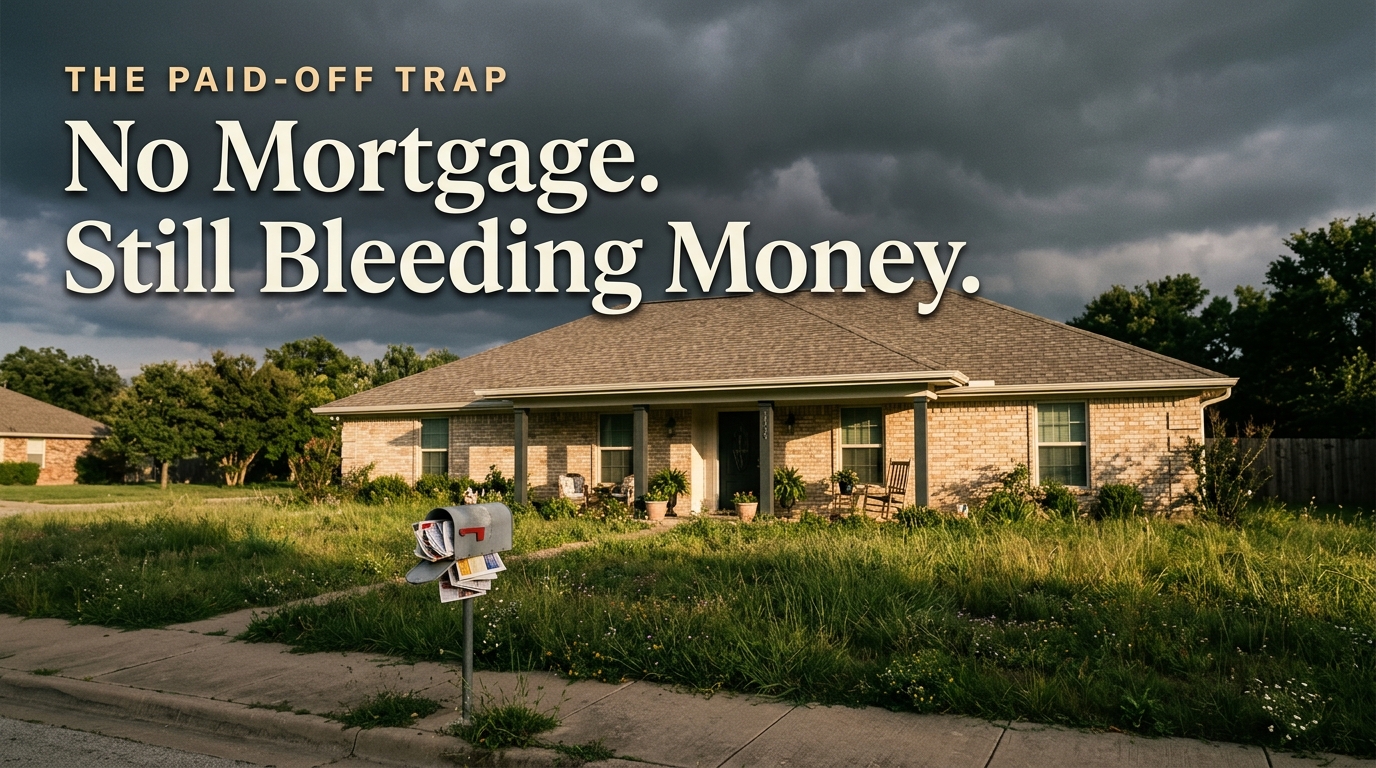
The paid-off house calls are the calm ones. Mom is gone, and that part hurts, but the house is free and clear. No bank. No payment book. Nobody threatening foreclosure.
If you're inheriting a house that is paid off, you've probably already said the sentence I hear every week: at least we don't have to worry about the house.
I want to be careful with that sentence, because half of it is true. Here's the half that isn't.
Most of the houses my company buys are already paid off. Not some of them. Most. The mortgage was never the problem on those files.
The silence was. Nothing forced anyone to act, so nobody acted, and the trouble grew quietly for years. This post covers what inheriting a house that is paid off actually leaves on your plate, and, just as important, when the right move is to keep the house and never call a buyer like me. For the bigger picture beyond the paid-off case, start with my guide to what happens when you inherit a house.
Quick answer: inheriting a house that is paid off means no mortgage, not no obligations. The deed stays in the deceased owner's name until heirship paperwork or probate moves it. Property taxes keep billing, usually at a higher rate once the owner's exemptions end, and homeowners insurance can lapse on a vacant house. Handle those three, then decide: keep, rent, or sell.
The Relief Is Real. So Is the Illusion.
Inheriting a house that is paid off starts with real relief, and the relief is legitimate. A house with debt comes with a countdown and a lender who can take it. If that's your situation, my guide to inheriting a house with a mortgage is the one you want, because the clock runs differently there.
A paid-off house feels finished. The hard work looks done, because somebody, probably your parents, spent thirty years doing it. A family friend once put it to me plainly about a grandfather's house we were trying to help before a tax sale: he bought and paid for that home, and he didn't have plans on losing it.
That house was free and clear. It was also carrying about $42,000 in back taxes and was likely weeks from the auction block when the family and I first spoke.
Here's the pattern behind that story, and I've watched it repeat since 2016. A mortgage forces the family onto one phone call within months. No mortgage forces nothing. The tax bill goes to a dead person's mailbox.
The deed sits. The family means to get to it. Years pass.
That's the illusion of inheriting a house that is paid off. No mortgage reads as done. It's actually just quiet. Three things keep moving whether you touch them or not: the title, the property taxes, and the insurance.
The Title Problem Nobody Sees: The Deed Still Says Their Name
Start with the fact that surprises almost every heir I talk to. Nothing transfers itself. Inheriting a house that is paid off doesn't put your name on the deed, and it doesn't tell the county the owner died.
In Texas, ownership passes to the heirs at the moment of death, but the county records don't know that. The deed on file still shows the person who died. Until someone builds the paper trail, no title company will insure a sale, which means no normal buyer can buy, which means the house is yours in theory and stuck in practice.
When you're inheriting a house that is paid off, this is the first thing to check, before the tax bill, before the furniture. If there's a will, probate moves the title. If there's no will, and on my files there usually isn't, the family has to document who the heirs are. For many Texas families the practical tool is an affidavit of heirship, a recorded document that lays out the family tree, signed with two disinterested witnesses.
I've seen what skipping this step costs. One family I worked with had gone three generations without probating anything. Great grandfather, then grandfather, then dad, each gone without the title moving once. The grandkids learned about the problem when the county served them with a lawsuit.
I've also seen the do-it-yourself version backfire for twenty years. A stepfather once paid $3,000 to a previous owner's daughter to sign the house over to him. Wrong relative. She had no legal right to sign anything away, so the deed was worthless, and nobody found out until his kids tried to transfer the title after he died.
A paid-off house with a broken title isn't an asset yet. It's an asset-shaped problem. Fix the paper first.
The Property Tax Clock: Exemptions Die With the Owner
Property taxes are how inheriting a house that is paid off goes wrong most often. Not the mortgage. There isn't one. The taxes.
Two things happen to the tax bill after an owner dies, and both point the wrong way.
First, the bill goes up. If your parent carried a homestead exemption and the over-65 exemption, those protections belonged to them, not to the house. Per the Texas Comptroller, a surviving spouse who is 55 or older can keep the over-65 tax ceiling. Children and other heirs cannot.
So the year after the owner passes, the same house can bill at a number they never paid in their life, while the family keeps budgeting off the old amount. That gap is where delinquency starts.
Second, missing the bill costs more than people expect. Under Texas Tax Code Section 33.01, a delinquent property tax picks up a 6 percent penalty in the first month, climbs to a 12 percent penalty by July, and collects another 1 percent in interest every month on top. Then the county's collection law firm adds its own fees. An heir on one of my calls described the balances perfectly: they're stacking up fast.
Real numbers from my own files, no names. One estate is sitting at roughly $23,000 in back taxes with a trial date already on the court's calendar. The grandfather's free-and-clear house from earlier reached $42,000 and a pending tax sale.
The county doesn't go easier on a house with no mortgage. If anything, that house draws more bidders at auction, because the taxes are the only major lien to clear.
Now the good news, because there is some. If you're an heir who actually lives in the house as your primary residence, Texas allows a homestead exemption on inherited heir property, even while the title is still being sorted, per Texas Law Help. It takes an application and heirship paperwork with the appraisal district. File it. Almost nobody does, and it's real money left on the table every single year.
And if you're 65 or older or disabled yourself, you can claim those exemptions in your own right, with a new tax ceiling set at your level. A qualifying heir living in the home can even file a deferral affidavit under Texas Tax Code 33.06 that pauses tax collection, and pauses any tax suit or tax sale, for as long as they own and occupy the house, with interest at 5 percent a year. The taxes wait; they don't vanish. But nobody can auction the house out from under a qualifying heir who files it.
The Insurance Nobody Updated
Insurance is the forgotten line item of inheriting a house that is paid off. Somewhere in a drawer is a homeowners policy with your parent's name on it, and it has two problems.
The policy covers the named person who owned and lived in the house, and after a death the house usually stops being lived in. According to the Insurance Information Institute, most homeowners policies limit or exclude coverage once a home sits vacant, typically after 30 to 60 days. Vandalism, theft, and water damage are commonly the first protections to disappear.
Picture the bad version. The house sits empty for eight months while the family decides. A pipe bursts in February, and the claim gets denied because the home was vacant. On a free-and-clear house that loss comes straight out of the inheritance, because no lender ever required coverage and nobody was watching.
The fix costs one phone call. Tell the insurer the owner died, ask about vacant-home or landlord coverage, and keep a policy in force until the family picks a direction. Insurance is the least dramatic item in this whole post. That's exactly why it gets skipped.
Why Paid-Off Houses Sit the Longest
Here's the trap I most want you to see, because it's the one that actually shrinks inheritances. With siblings and co-heirs, inheriting a house that is paid off removes the deadline but not the decision. No bank pressure means no urgency, so the house just sits.
Everyone assumes someone else is handling it. The taxes quietly compound. And each year the family waits, the math gets worse in two directions at once.
The worst version I've watched up close was an estate with 18 interest holders across three generations and somewhere between $40,000 and $45,000 in back taxes. Early on, the heirs expected around $10,000 each. Four years of probate and two paid attorneys later, the realistic number was about $2,800 apiece.
The house was paid off the entire time. Nobody did anything wrong except wait.
Heirs also multiply while you wait. That 18-person estate started as seven siblings. Then a brother died, his share split among his descendants, and suddenly the family needed signatures from relatives in other states they had never met.
If your family is already stuck like this, know one thing: you don't need everyone's permission to act on your own share. Your share is your share, and buying individual heir interests in exactly these stuck, paid-off houses is what my company does. But hold that thought, because for a lot of readers the better answer is the opposite one, and it's coming two sections down.
Step-Up in Basis, in Plain English
One short section of genuinely good tax news. When you inherit a house, your cost basis for capital gains resets to the property's fair market value on the date the owner died, under IRS rules laid out in IRS Publication 551. Say your dad paid $40,000 for the house in 1985 and it was worth $200,000 when he passed. Your basis is $200,000, so if you sell reasonably soon for about that value, there's little or no capital gains tax to pay.
The step-up in basis applies to any inherited home, but when you're inheriting a house that is paid off it means the sale proceeds are close to all yours. Two practical notes. Document the date-of-death value, ideally with an appraisal, because you'll want proof later.
And notice the quiet incentive: the step-up rewards families who decide, since a house that sits another decade builds new taxable gain on top of the stepped-up number. Confirm the details with a tax professional. I buy houses; I don't do your taxes.
The Paid-Off House Test: Four Questions That Tell You Keep, Rent, or Sell
When someone calls me about inheriting a house that is paid off, I walk through a version of the same four questions every time. Can I walk you through how that works? You can run this tonight at the kitchen table, no buyer required. Fair warning: the fourth question is the one families get wrong.
1. Whose name is on the deed today?
If the honest answer is "still my mother's," that's your first project no matter what you decide later. Clean title makes every option real. Broken title makes every option theoretical. Probate or an affidavit of heirship gets the record fixed, and everything else in this test assumes you'll do it.
2. How many heirs are there, and do you agree?
One heir is the easy lane, and I'll get to it below. Two or three aligned heirs can still move fast if the agreement goes in writing early. But once you count more heirs than you could seat at one dinner table, the odds of a clean family-run outcome drop hard. My 18-heir file says hello.
3. Can you carry it at the new tax number?
Not last year's bill. The new bill, without your parent's exemptions, plus insurance at vacant-home or landlord rates, plus real maintenance. Inheriting a house that is paid off still costs thousands a year in carry before you sleep a single night in it. If that number makes you wince, that's not shameful. That's information.
4. Do you want the house, or the idea of the house?
This is the one that keeps families frozen. "It's dad's house" is a feeling, not a plan, and I say that gently, because the feeling is legitimate. One heir told me what she truly couldn't part with was the chair she sat in as a kid, and the table.
Furniture fits in a truck. A house with a tax clock doesn't.
Now read your answers together. Clean title, few heirs, carry costs you can afford, and a real yes on wanting it: keep it. Wantable but not by you: rent it or sell it whole while the step-up in basis is fresh. Broken title, scattered heirs, taxes already stacking: that's when selling to a specialist, the whole house or just your share, beats waiting on a consensus that isn't coming.
When Keeping the House Is the Right Call
Here's the section a lot of house buyers would quietly delete. I buy inherited property for a living, and plenty of people reading this should not sell to me or to anyone.
If you're a single heir, the title is clean or one recorded affidavit away from clean, and you want the place, keep it. Full stop. Move in and it may be the cheapest housing you'll ever have. Keeping it can be the best possible outcome of inheriting a house that is paid off, and it doesn't require my help or anyone else's.
The keep checklist for inheriting a house that is paid off is short:
- Get the deed into your name. Probate if there's a will, the affidavit-of-heirship route for many families without one. Weeks of paperwork, not years.
- File your own exemptions. Homestead if you live there, over-65 or disability if they apply to you. Your parent's exemptions ended with them; yours start when you file.
- Put insurance in your name. A real policy for how the house is actually used, occupied or rented.
- Update the tax mailing address. Bills should reach a living person who opens mail. Half the disasters I clean up started in an unchecked mailbox.
The paid-off rental is the other strong keep. With no mortgage payment, rent minus taxes, insurance, and repairs is mostly yours, and Dallas-area houses like the ones I work on rent all day long. If the emotional weight is the loudest part, because this was the house you grew up in, I wrote about that side separately in my guide to inheriting your parents house.
Picture it three months from now, done right. The deed is recorded in your name. Your homestead exemption is filed, your policy is active, and the tax bill comes to your own mailbox. That's what finished actually looks like, and for a single heir with clean title it's genuinely reachable by fall.
If that's you, close this tab and go start the paperwork. I mean it. The rest of this post is for the families where the test pointed the other way.
Questions Heirs Ask About Inheriting a House That Is Paid Off
Yes. Property taxes continue every year no matter what the mortgage status is, and in Texas the previous owner's homestead and over-65 exemptions end at death for everyone except a surviving spouse who is 55 or older. Expect the bill to rise. Unpaid balances grow fast under Texas Tax Code 33.01 penalties and interest, and enough delinquency triggers a tax lawsuit and eventually an auction, even on a free-and-clear house.
Nothing transfers automatically. If there's a will, probate moves the title. Without one, many Texas families record an affidavit of heirship, a document that establishes the family tree with two disinterested witnesses, so the county record finally matches reality. Until one of those happens, the deed stays in the deceased owner's name and no title company will insure a sale.
Often little or none, because of the step-up in basis. Under IRS rules, your cost basis resets to the home's fair market value on the date of death, so selling near that value produces little taxable gain. Hold the house for years of new appreciation and the growth above the stepped-up basis becomes taxable when you sell. Document the date-of-death value and confirm your numbers with a tax professional.
Slow, expensive drift, the default outcome of inheriting a house that is paid off. The exemptions come off and the tax bill rises, unpaid taxes compound monthly, the insurance quietly lapses, and every death in the family splits ownership further. Eventually the county files a tax suit naming every heir it can find. I watched one paid-off house sit four years in that limbo while the expected payout per heir fell from about $10,000 to about $2,800.
Yes. In Texas you can sell your individual heir interest without the other heirs' permission or signatures. That matters most on stuck houses where the family can't agree, because it lets one person exit while the rest keep their options. Companies like mine buy partial interests as-is and handle the title work and back taxes at closing. Your share is your share.
Only for a while. Most homeowners policies limit or exclude coverage once a home sits vacant, commonly after 30 to 60 days, according to the Insurance Information Institute, and vandalism, theft, and water damage protections usually vanish first. Call the insurer, report the death, and ask about vacant-home coverage until the family settles on a plan. It's one phone call protecting the entire inheritance.
Free and Clear Is a Head Start, Not a Finish Line
Inheriting a house that is paid off really is the good version of this story. You're starting with equity someone you loved spent decades building. Just don't mistake a head start for a finish.
Move the title. Reset the taxes and the insurance. Run the paid-off house test, then pick keep, rent, or sell on purpose.
Because the families who get hurt aren't the ones who choose keep, and they aren't the ones who choose sell. They're the ones who choose nothing.
If the Test Says Sell, Here's What We Do
TitleQuest Pro buys inherited houses and individual heir interests as-is in Texas and Montana. Inheriting a house that is paid off but tangled in heirs and back taxes is the exact situation we built the company for. The debt-free part doesn't scare us, and the tangled part doesn't either.
The mechanism is simple. My team pulls the title, tax history, and heirship picture in-house, so you never pay to find out where things stand. Any back taxes get handled at closing out of our money, not yours. A mobile notary comes to you, wherever you live, and our written offer arrives within 48 hours and never expires.
There's one more step in our process, the one sellers most often say they didn't expect from a house buyer. Ask me about it on the call.
If inheriting a house that is paid off has turned into the thing you think about at 2 a.m., whether it's the whole house or just your share, tell us about the property or book a 15-minute call with me. No fees. No obligation. You can say yes, you can say no, or you can sit with it for a month. The offer will still be good.
TitleQuest Pro is not a law firm and this isn't legal advice. Every situation is different. If you need legal guidance, talk to a Texas probate or real estate attorney.

Daniel Bear
Founder, TitleQuest Pro
Daniel has been in real estate since 2016 and today buys inherited houses and untangles the titles other buyers won't touch. He works from Bozeman, Montana, with one foot in Montana and the other on the ground in Texas. TitleQuest Pro is not a law firm; this is general information, not legal advice.
Related reading.
What happens when you inherit a house
The whole map: the law, the five realities, and every path forward.
What happens when you inherit a house →Inheriting your parents' house
Grief plus siblings plus a house. A 30-day grace plan for the first month.
Inheriting your parents' house →I inherited a house, now what
The seven-step, first-14-days checklist, in order.
I inherited a house, now what →Ready when you are.
When you're ready to talk, we're here. Fill out the form, give us a call, or book a 15-minute conversation with Daniel. We'll handle the next step.
Tell us about the property.
We'll review it. We'll call you back within 24 hours. No pressure, no fees, no obligation.